Fish Habitat
Evaluation of the effectiveness of large wood as a restoration strategy to improve fish habitat
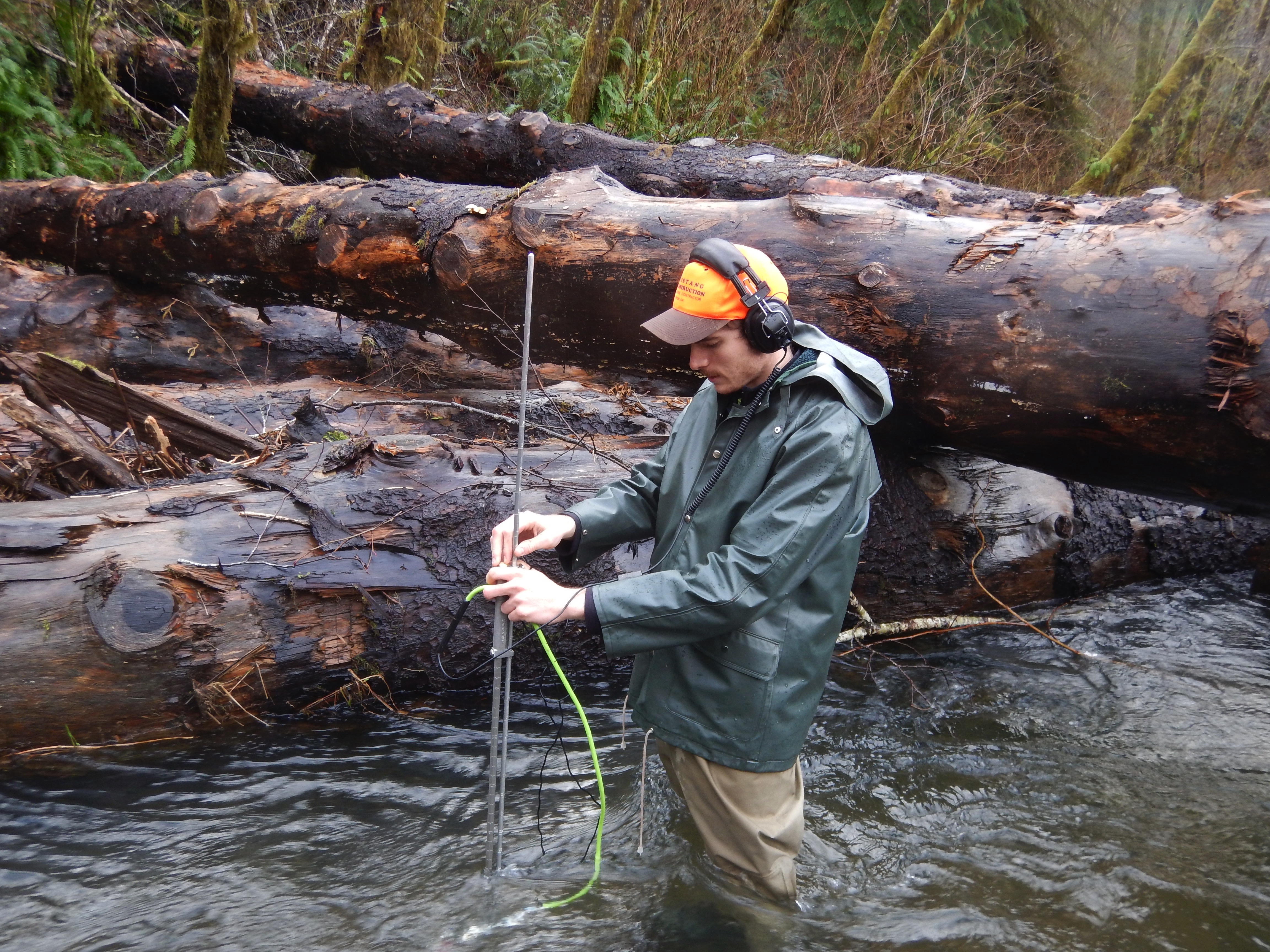
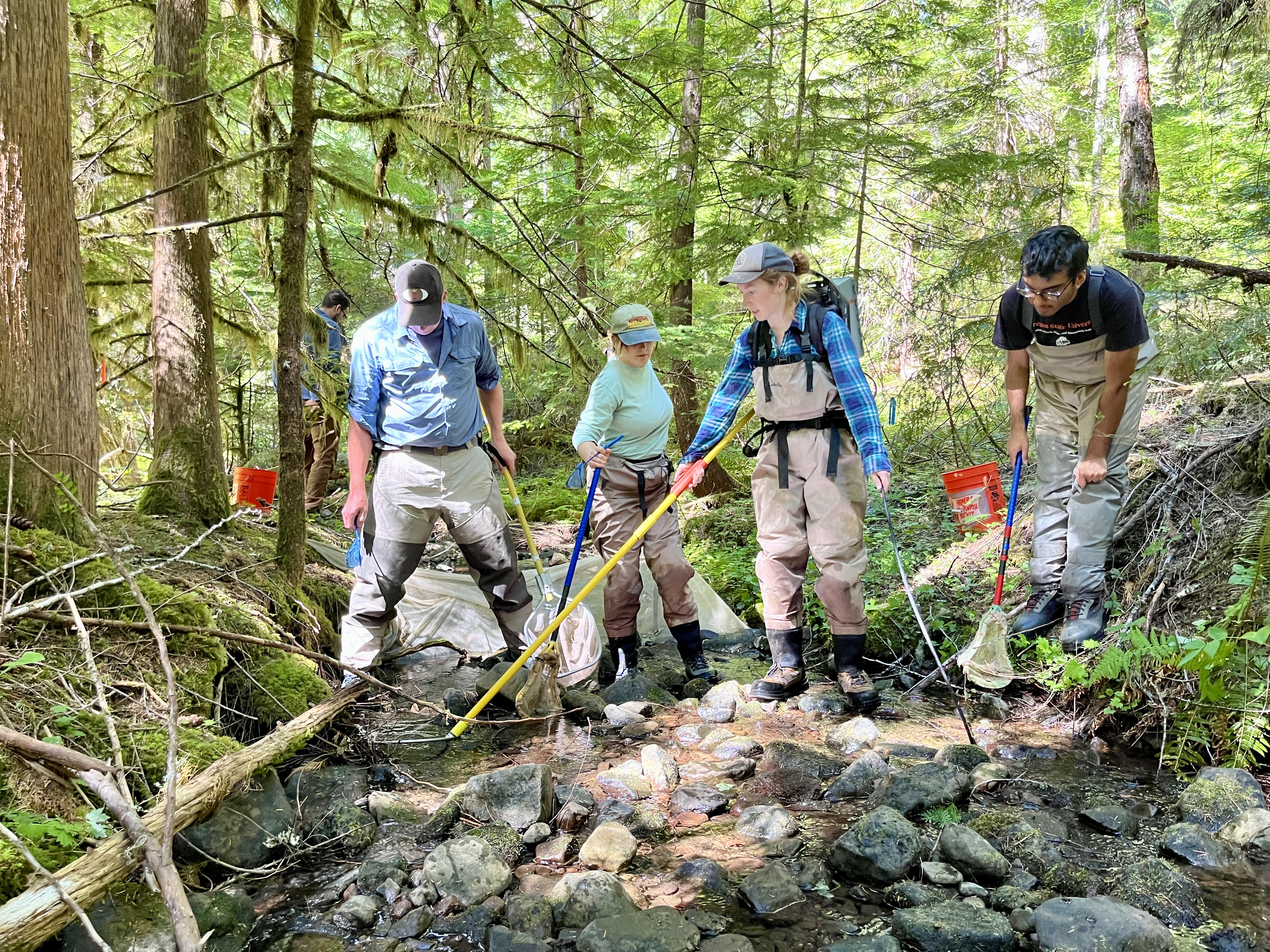
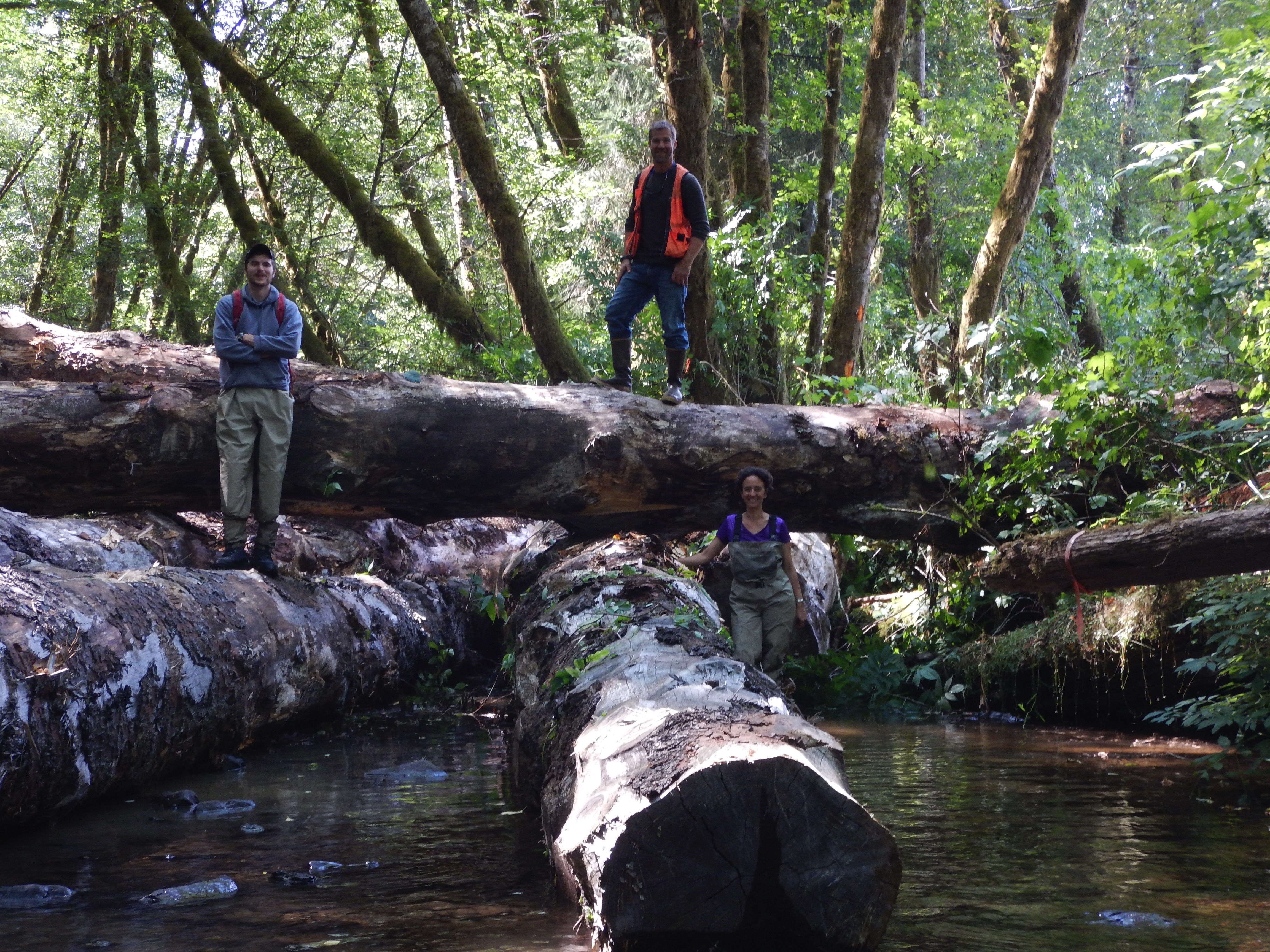
Large wood additions are often part of fish habitat restoration projects. However, there is limited information about the spatial-temporal variability in the instream changes after large wood is added. Using a variety of methods, we evaluated short- and long-term changes in the channel morphology, channel hydraulics, and salmon population in the Oregon Coast Range.Sponsor by Fish and Wildlife Habitat Managed Forests Research Program, OWEB, and Spirit Mountain Fund.
Read more here
Changes Following Large Wood Introductions. See here.
Hydraulic Changes Following Large Wood Introductions. See here.
Coho Salmon Population Changes Following Large Wood Introductions. See here.
Impacts of climate change on apex predator. of large wood as a restoration strategy to improve fish habitat
Climate change is expected to increase drought frequency and severity in the Pacific Northwest, threatening headwater streams where low flows and rising temperatures can differentially affect aquatic species. Using a BACI experiment in the H.J. Andrews Experimental Forest, we decoupled reduced flow and elevated temperature and found contrasting apex predator responses. Coastal cutthroat trout benefited from warming but declined under low flow, while coastal giant salamanders showed the opposite pattern.
52. Maffia, M.M., A. Swartz, C. Segura, and D. Warren. 2025. Contrasting apex predator responses to experimentally reduced flow and increased temperature in a headwater stream. Ecosphere. https://doi.org/10.1002/ecs2.70293